- ads -
Remember the days when the peak of mobile entertainment was a pixelated bird struggling to fly through green pipes? It feels like a lifetime ago.
Back then, we didn’t ask for much. We just wanted a quick distraction while waiting for the bus or sitting in a doctor’s office.
- ads -
Fast forward to today, and we are carrying pocket-sized supercomputers capable of running Genshin Impact, a massive open-world RPG that rivals console titles.
The journey from simple time-wasters to complex, multi-billion dollar ecosystems is one of the most fascinating evolutions in tech history.
- ads -
The Era of the ‘Thumbing’ Mechanic
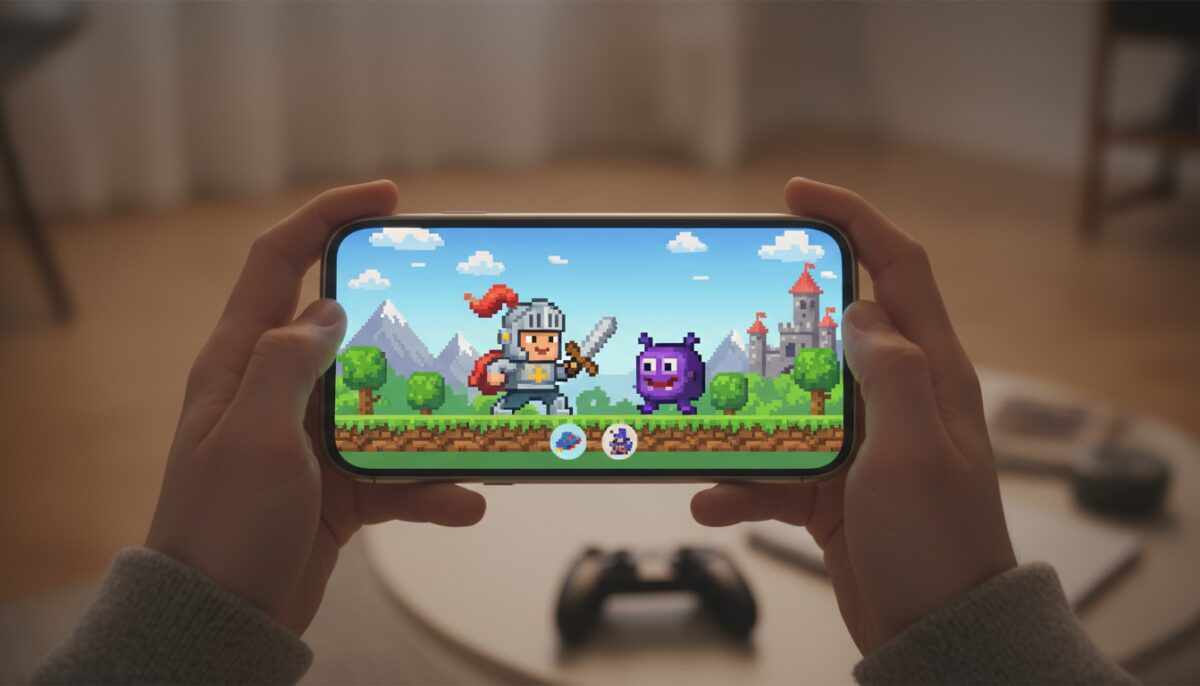
In the early 2010s, mobile gaming was defined by simplicity. Developers weren’t trying to tell epic stories; they were trying to hook you in thirty seconds.
Games like Angry Birds, Fruit Ninja, and Doodle Jump relied on a single, intuitive gesture. You swiped, you tapped, or you tilted.
These games were “snackable.” They were designed to be started and stopped instantly without any penalty to the player’s progress.
The Flappy Bird Phenomenon
Then came Flappy Bird. It was a cultural reset. It proved that a game didn’t need high-end graphics or complex mechanics to dominate the world.
The frustration was the feature. Its sudden removal from the App Store by its creator, Dong Nguyen, only added to the legend of the “simple” era.
At this stage, “serious” gamers still looked down on mobile. It was seen as a platform for casuals, moms, and bored commuters.
The Shift Toward Engagement and Monetization
As the hardware improved, so did the business models. We moved away from the $0.99 premium price tag toward the Freemium model.
Candy Crush Saga and Clash of Clans changed the landscape by introducing social mechanics and “energy” systems.
Suddenly, you weren’t just playing alone. You were competing with Facebook friends or building a village that needed protection 24/7.
This era introduced the concept of the “whale”—players who would spend thousands of dollars on in-app purchases to stay at the top.
Pros and Cons of the Freemium Era
Pros:
- Lower barrier to entry; anyone could download the game for free.
- Constant updates and new levels kept games alive for years.
- Communities formed around clans and competitive leaderboards.
Cons:
- Introduction of “Pay-to-Win” mechanics that frustrated non-spending players.
- Predatory “loot box” systems began to emerge in various genres.
- Gameplay often took a backseat to psychological monetization tricks.
The Hardware Revolution: Power in Your Pocket
The turning point happened when mobile processors began to catch up with the power of dedicated handheld consoles like the PS Vita or Nintendo 3DS.
With the introduction of Apple’s A-series chips and high-end Snapdragon processors, developers realized they could do more than just 2D puzzles.
We started seeing “impossible” ports. Games like XCOM: Enemy Unknown and Star Wars: Knights of the Old Republic proved phones could handle “real” games.
Battle Royale and the Death of “Casual” Stigma
The launch of PUBG Mobile and Fortnite on mobile devices was the final nail in the coffin for the “casual-only” argument.
For the first time, a kid on an iPhone could play the exact same game, in the same match, as someone on a high-end PC or a PlayStation 4.
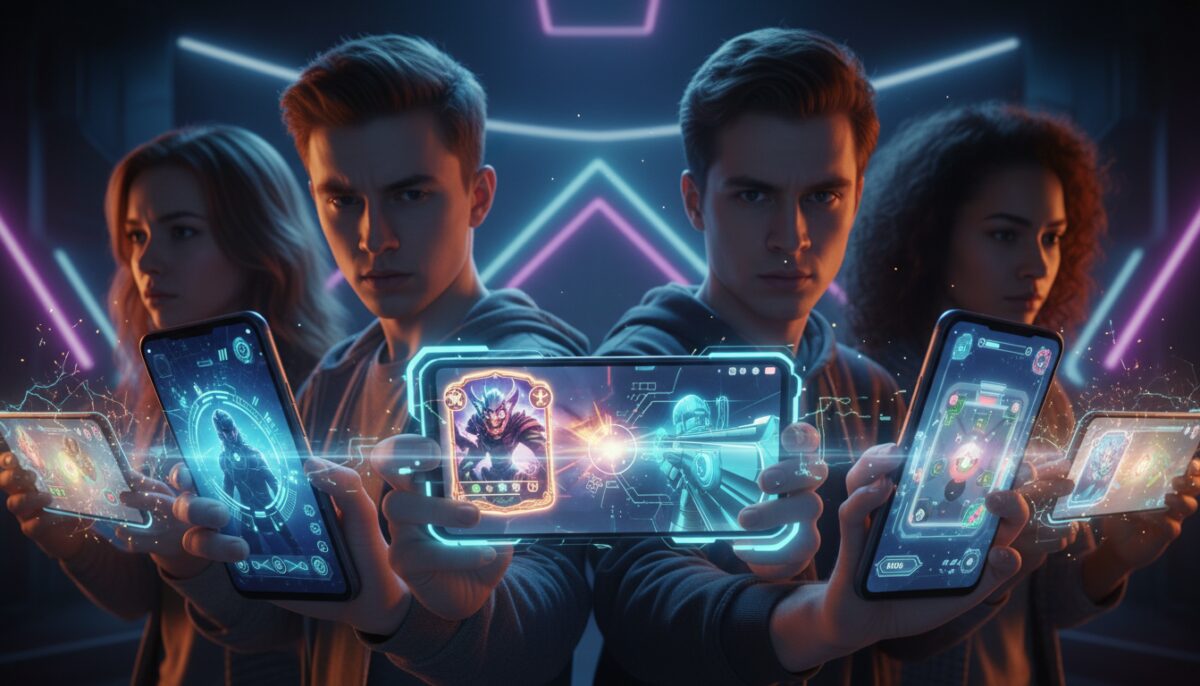
This was the birth of Cross-Platform Play. It unified the gaming world and forced the industry to take mobile seriously.
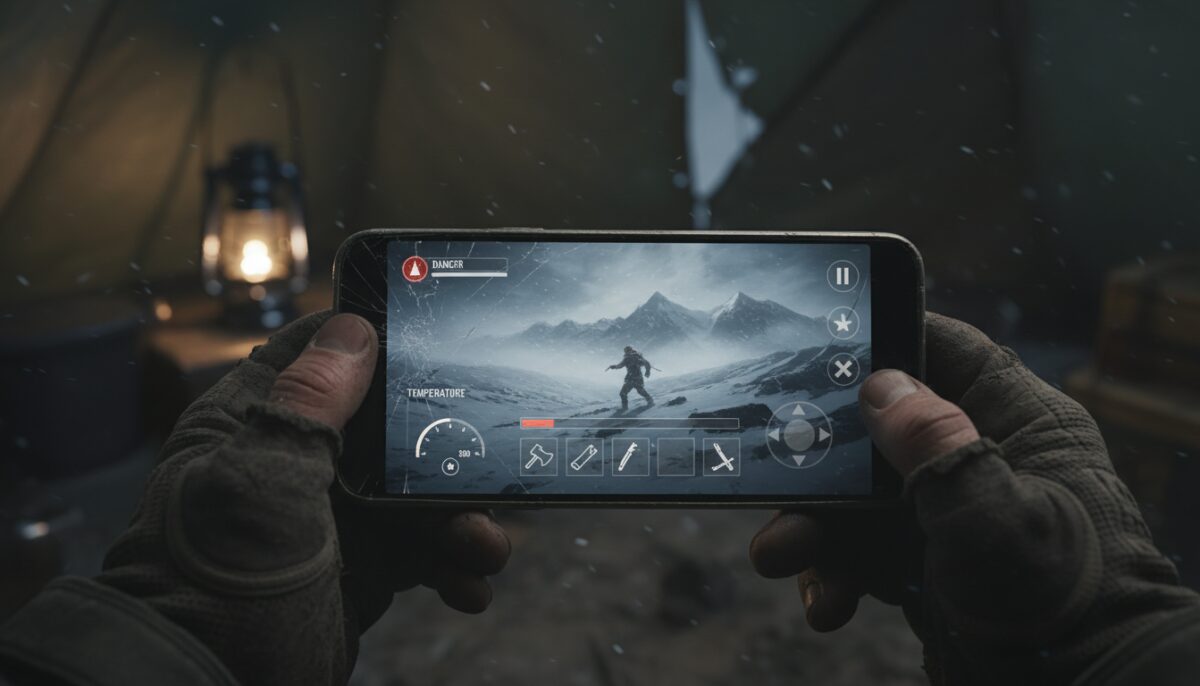
Mobile shooters required complex touch controls or Bluetooth controllers, shifting the demographic toward “hardcore” younger players.
Genshin Impact: The Modern Masterpiece
In 2020, HoYoverse (then miHoYo) released Genshin Impact. It wasn’t just a good mobile game; it was a masterpiece by any standard.
Genshin offered a massive, high-fidelity open world called Teyvat, filled with lore, voice-acted quests, and a complex elemental combat system.
It used the Gacha mechanic for monetization, but the core gameplay was so polished that it felt like a $60 AAA title given away for free.
The success of Genshin Impact showed that mobile players were willing to invest hundreds of hours into a single, deep narrative experience.
Why Genshin Impact Changed Everything
- Production Value: It featured orchestral soundtracks and top-tier voice talent in multiple languages.
- Seamless Updates: A massive new region and story content are added every few weeks, keeping the world fresh.
- Universal Access: You can play on your phone during lunch and continue on your PC when you get home.
- Visual Fidelity: It pushed mobile GPUs to their absolute limit with beautiful lighting and particle effects.
The Rise of Mobile Esports
As games became more complex, they also became more competitive. Mobile is now the leading platform for Esports in many parts of the world.
In regions like Southeast Asia and Brazil, games like Free Fire and Mobile Legends: Bang Bang attract millions of viewers.
The accessibility of a phone means that anyone has the potential to become a professional player without needing a $2,000 rig.
Subscription Services: The New Frontier
To combat the fatigue of microtransactions, we are seeing the rise of curated services like Apple Arcade and Google Play Pass.
These services focus on premium, ad-free experiences. They encourage developers to focus on art and innovation rather than “whaling” mechanics.
This has led to a resurgence of indie gems on mobile, such as Sayonara Wild Hearts and Fantasian (from the creator of Final Fantasy).
The Future: Cloud Gaming and Beyond
We are now entering the era of Cloud Gaming. Services like Xbox Cloud Gaming (xCloud) and GeForce Now allow you to stream the world’s most demanding games.
Your phone is no longer limited by its own hardware. If you have a fast internet connection, you can play Cyberpunk 2077 on a budget Android device.
This democratizes gaming even further, removing the hardware barrier entirely and making the smartphone the ultimate gaming portal.
The Evolution of Controllers
We can’t talk about mobile gaming growing up without mentioning the hardware accessories that made it possible.
Devices like the Backbone One or the Razer Kishi turn a smartphone into something that looks and feels like a Nintendo Switch.
This physical evolution has helped bridge the gap for “traditional” gamers who find touchscreens difficult for precise movements.
Conclusion: A Platform No Longer Ignored
Mobile gaming has spent the last decade proving its critics wrong. It is no longer the “little brother” of the gaming industry.
In terms of pure revenue, mobile gaming now earns more than the console and PC markets combined.
From the simplicity of Flappy Bird to the breathtaking scale of Genshin Impact, the journey has been nothing short of a revolution.
Whether you’re a casual player or a hardcore competitor, there is no denying that the phone in your pocket is the most important gaming device in the world.
The “snackable” games will always be there for a quick laugh, but the “full-course meals” are what define the future of the medium.
As we look forward, the lines between mobile and console will continue to blur until they disappear entirely. And honestly? We can’t wait.
The next time someone tells you that mobile gaming isn’t “real” gaming, just show them a sunset in Teyvat or a high-stakes match in PUBG.
The evidence is clear: mobile gaming hasn’t just grown up—it has taken over the world.