- ads -
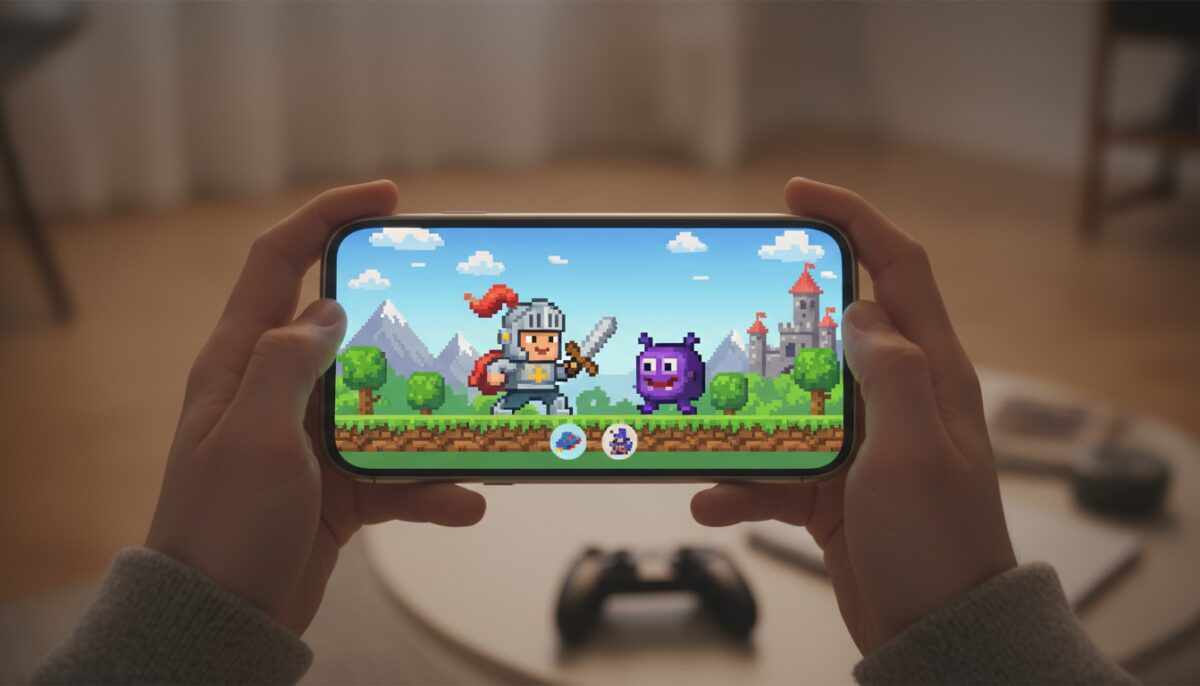
In an era where mobile games constantly push for photorealistic graphics and complex 3D environments, there’s something refreshingly honest about pixel art. These charming, blocky visuals harken back to gaming’s golden age while proving that you don’t need cutting-edge graphics to create an immersive experience.
Pixel art mobile games have carved out their own special niche in the app stores, attracting millions of players who appreciate artistic vision over graphical horsepower. These games demonstrate that creativity, solid gameplay mechanics, and thoughtful design can triumph over raw processing power every single time.
- ads -
Let’s dive into the world of pixel art mobile gaming and explore why these seemingly simple titles continue to captivate audiences worldwide.
The Timeless Appeal of Pixel Art
Before we jump into specific games, it’s worth understanding why pixel art resonates so deeply with mobile gamers. There’s a certain nostalgia factor at play, sure, but that’s not the whole story.
- ads -
Pixel art forces developers to focus on what truly matters: gameplay, mechanics, and player engagement. When you can’t rely on flashy graphics to wow your audience, you need to deliver substance. This constraint often leads to more polished, thoughtful game design.
Additionally, pixel art games typically have smaller file sizes and lower system requirements, making them accessible to a broader audience. Not everyone has the latest flagship phone, and pixel art games ensure that great gaming experiences aren’t locked behind hardware barriers.
Stardew Valley: Farming Perfection in Pixels
When discussing pixel art mobile games, Stardew Valley deserves top billing. This farming simulation RPG has captured millions of hearts with its deceptively simple appearance and incredibly deep gameplay systems.
Created by a single developer over four years, Stardew Valley puts you in charge of your grandfather’s old farm. You’ll plant crops, raise animals, explore caves, and build relationships with the local townspeople. The pixel art style perfectly captures the cozy, pastoral atmosphere that makes the game so addictive.
What makes Stardew Valley special is how the minimalist graphics enhance rather than detract from the experience. Every character sprite is expressive and memorable, every season brings distinct visual changes, and the world feels alive despite its retro aesthetic.
Why It Works
- Hundreds of hours of content without feeling overwhelming
- Charming character designs that convey personality through limited pixels
- Satisfying progression systems that keep you coming back
- Perfect touch controls adapted for mobile play
- Regular updates that add new content and features
Terraria: 2D Sandbox Adventure
Terraria takes the sandbox genre and compresses it into a 2D pixel art format, creating one of the most content-rich mobile games available. Often described as “2D Minecraft,” Terraria actually offers a completely different experience with more emphasis on combat, exploration, and boss battles.
The game drops you into a procedurally generated world where you’ll mine resources, craft equipment, build structures, and fight increasingly challenging enemies. The pixel art allows for incredible variety in enemies, items, and environments without requiring massive storage space or processing power.
With over 20 boss fights, hundreds of enemies, and thousands of items to craft and collect, Terraria proves that pixel art doesn’t mean limited scope. The developers have continuously supported the game with free updates, adding new biomes, bosses, and gameplay mechanics years after release.
Dead Cells: Roguelike Excellence
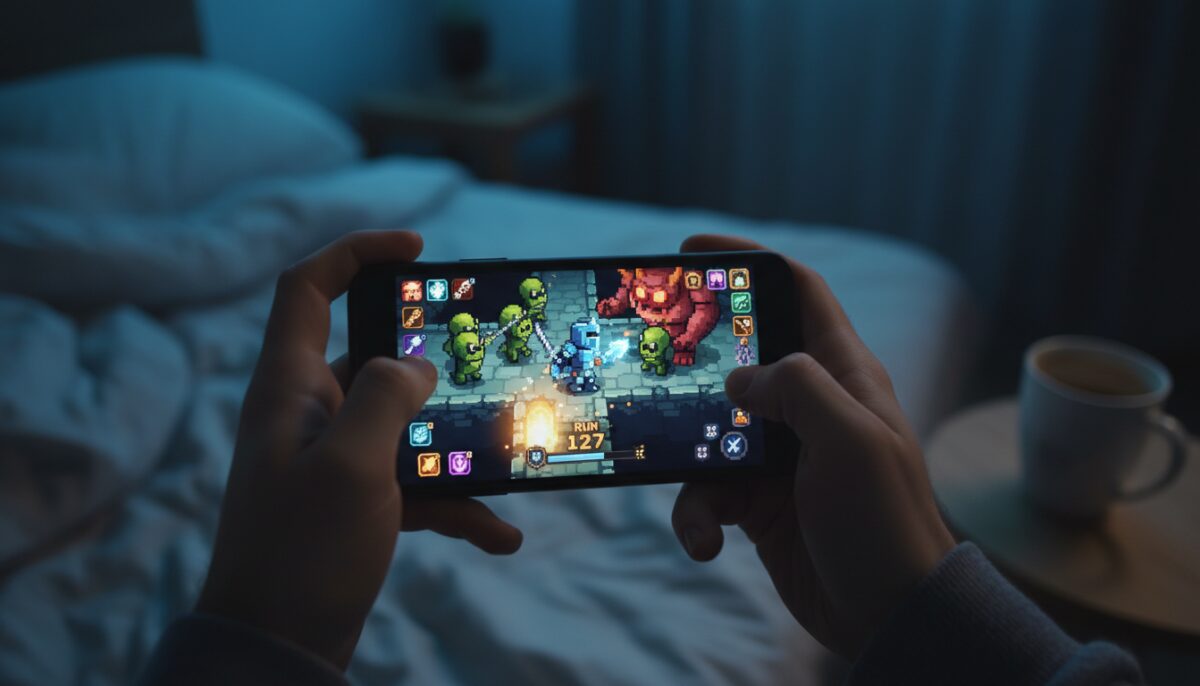
Dead Cells combines roguelike elements with Metroidvania exploration and fast-paced combat, all wrapped in gorgeous animated pixel art. This game demonstrates that pixel graphics can be fluid, dynamic, and visually stunning when executed with skill and attention to detail.
You play as a reanimated corpse exploring an ever-changing castle, collecting weapons and abilities while fighting through hordes of enemies. Each run is different thanks to procedural generation, and permanent upgrades ensure you’re always making progress even when you die.
The animation work in Dead Cells is particularly impressive. Combat feels weighty and responsive, with every sword swing and dodge roll animated beautifully. It’s proof that pixel art can deliver modern, AAA-quality action when developers truly understand the medium.
Pros and Cons of Dead Cells
Pros:
- Incredibly smooth and responsive combat system
- Tons of weapons and abilities to discover and master
- High replay value with multiple difficulty levels
- Regular content updates with new areas and items
- Stunning pixel art animation that rivals hand-drawn work
Cons:
- Steep learning curve for newcomers to roguelikes
- Can be frustratingly difficult at times
- Premium price point may deter some players
- Requires decent hardware despite pixel art style
Downwell: Vertical Descent Mastery
Downwell strips gaming down to its absolute essentials: falling down a well while shooting enemies beneath you. This minimalist roguelike uses a limited color palette and simple pixel art to create an intensely focused, addictive experience.
The game’s brilliance lies in its elegant simplicity. Your gun boots let you shoot downward, which also slows your descent and can be used to bounce off enemies. This single mechanic creates surprisingly deep strategic gameplay as you navigate randomly generated wells filled with enemies and obstacles.
Downwell proves that pixel art games can thrive on mobile through perfect one-handed portrait mode controls. It’s ideal for quick gaming sessions on the bus or during lunch breaks, yet deep enough to keep you playing for hours at home.
Minecraft: The Blocky Phenomenon
While technically not traditional pixel art, Minecraft’s blocky, low-resolution aesthetic embraces the same “less is more” philosophy. The game has become a cultural phenomenon, proving that simple graphics can’t stop a truly great game from reaching massive audiences.
Minecraft’s mobile version offers the full experience of building, exploring, and surviving in procedurally generated worlds. The simplified graphics allow for impressive draw distances and smooth performance even on older devices, making it accessible to virtually anyone with a smartphone.
The game’s creative potential is virtually unlimited. Players have constructed everything from working computers to scale replicas of real-world landmarks, all using simple textured blocks. It’s a testament to how constraints can fuel creativity rather than limit it.
Shovel Knight: Retro Done Right
Shovel Knight is a love letter to classic NES-era platformers, featuring authentic 8-bit style graphics with modern quality-of-life improvements. The game follows a shovel-wielding knight on a quest to rescue his beloved and defeat the evil Enchantress.
What sets Shovel Knight apart is how it captures the spirit of retro gaming without the frustrating aspects. The pixel art adheres to NES limitations in resolution and color palette, but the game includes conveniences like checkpoints and refined controls that make it accessible to modern players.
The mobile version translates this experience beautifully with customizable touch controls and support for external controllers. It’s a perfect example of how pixel art can evoke nostalgia while delivering a contemporary gaming experience.
The Advantages of Pixel Art in Mobile Gaming
Beyond aesthetics, pixel art offers practical advantages that make it particularly well-suited for mobile platforms. Understanding these benefits helps explain why so many successful mobile games embrace this art style.
Technical Benefits
- Smaller file sizes: Pixel art assets take up significantly less storage space than high-resolution 3D models and textures
- Better battery life: Simpler graphics require less processing power, extending gameplay sessions
- Faster load times: Reduced asset complexity means quicker loading and smoother transitions
- Broader device compatibility: Games run well on both flagship phones and budget devices
- Easier updates: Smaller patches mean less data usage and faster downloads
Design Benefits
Pixel art forces developers to communicate through clear, readable design. Every pixel matters, which means characters, enemies, and items need distinct silhouettes and color schemes. This clarity is especially important on smaller mobile screens where visual information needs to be instantly recognizable.
The art style also ages gracefully. While realistic 3D graphics from even a few years ago can look dated, well-executed pixel art remains timeless. Games like Super Mario Bros. and The Legend of Zelda still look charming decades later, and modern pixel art games benefit from this same longevity.
Crossy Road: Casual Pixel Perfection
Crossy Road takes the classic Frogger formula and updates it with voxel-based pixel art, endless gameplay, and hundreds of unlockable characters. This free-to-play title became a massive hit by combining simple mechanics with charming presentation.
The game’s blocky characters and environments create a distinctive look that’s both retro and modern. Each character has unique animations and sometimes special abilities, encouraging collection without requiring purchases. The monetization is player-friendly, relying on optional ads and cosmetic purchases rather than aggressive paywalls.
Crossy Road proves that pixel art works perfectly for casual mobile games. Its pick-up-and-play nature combined with the charming visuals makes it accessible to all ages while maintaining enough challenge to keep players engaged long-term.
Why Pixel Art Will Continue to Thrive
The future looks bright for pixel art mobile games. As development tools become more accessible and indie developers continue to innovate, we’re seeing increasingly creative uses of the medium. The style has moved beyond simple nostalgia to become a legitimate artistic choice respected by players and critics alike.
Modern pixel art games often push the boundaries of what’s possible with limited resolution. Advanced lighting effects, particle systems, and animation techniques create visuals that would have been impossible on actual retro hardware, giving us the best of both worlds.
The mobile market particularly benefits from pixel art’s efficiency and charm. As phones become more powerful, developers can choose to create even more ambitious pixel art games rather than simply chasing photorealism. This artistic diversity enriches the entire gaming ecosystem.
Final Thoughts
Pixel art mobile games prove that artistic vision and solid gameplay trump graphical fidelity every time. These games succeed not despite their simplified graphics, but often because of them. The constraints of pixel art force developers to focus on what truly matters: creating engaging, memorable experiences.
Whether you’re farming in Stardew Valley, exploring dungeons in Dead Cells, or simply crossing roads in Crossy Road, pixel art games offer something special. They remind us that gaming is about fun, creativity, and connection—not polygon counts or texture resolution.
So next time you’re browsing the app store, don’t overlook those charming pixel art titles. They might just offer the most rewarding gaming experiences on your phone, proving once and for all that less truly is more.